

Uncategorized
Royal Oak Genuine vs Super Clone — Side by Side Comparison
Aug
Genuine AP Royal Oak Next to a Super Clone — The Differences Are Smaller Than You Think
A friend bought a genuine Royal Oak last year. 15500ST, blue dial, roughly $24,000 after taxes. Beautiful piece. I handled it multiple times, studied the finishing, appreciated the details.
Then I acquired an AP Royal Oak replica of the same reference. Top-tier super clone. Placed them side by side under good lighting with a loupe.
What I found was uncomfortable for anyone invested in the genuine-only narrative.
The Context First
This isn’t about declaring clones “just as good” as genuine. Different products serving different purposes. But the specific differences matter more than vague statements about “quality” or “craftsmanship.”
The Royal Oak super clone I examined came from a respected source. Not the cheapest option, not a random AliExpress gamble. Proper research, verified seller, documented quality tier.
My friend’s genuine piece was purchased through an AD after eighteen months on a waitlist. He has receipts, warranty card, the whole provenance.
Fair comparison? As fair as possible.
What Looked Identical
Starting with what matched:
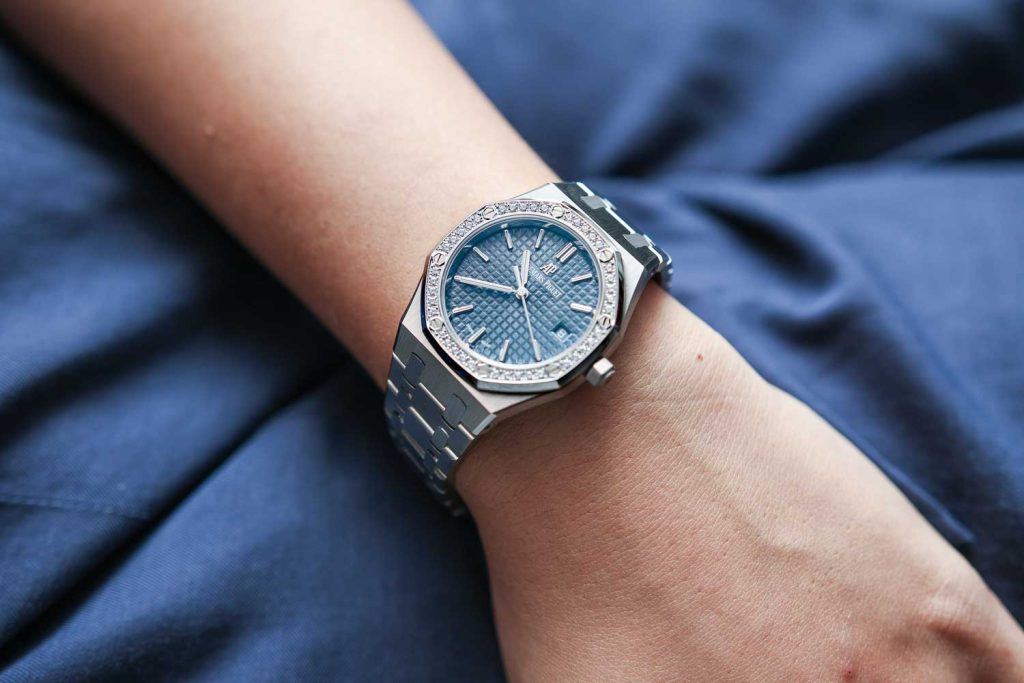
Case shape and dimensions: The distinctive octagonal bezel with eight exposed screws — correct on both. 41mm diameter matched exactly. Thickness within 0.2mm. The AP clone didn’t feel noticeably different on wrist.
Integrated bracelet tapering: This is where cheap fakes die immediately. The Royal Oak bracelet tapers from case to clasp with subtle proportion changes. The Royal Oak replica nailed this. Links aligned properly, no gaps, smooth articulation.
Dial texture: The Grande Tapisserie pattern — those small squares covering the dial — looked correct under magnification. Sharp edges, consistent depth, proper light play.
Blue dial color: This worried me beforehand. AP’s blue shifts in different lighting. Photographing both dials in sunlight, indoor lighting, and shade — color matched within what I’d attribute to manufacturing variance even between genuine pieces.
Applied indices: White gold on genuine, rhodium-plated on the Audemars Piguet replica. Visually identical. Even the lume application looked consistent.
Differences Under Scrutiny
Now the real comparison:
Bezel screws: Genuine uses white gold screws. Clone uses plated steel. Under extreme magnification, the plating edge is visible. Normal viewing distance? Can’t tell. The AP Royal Oak super clone screws also sat fractionally higher — maybe 0.1mm — than genuine. Truly nitpicking territory.
Finishing transitions: Where brushed surfaces meet polished surfaces on the case, genuine Audemars executes with absurd precision. The best AP replica was close — very close — but under 10x magnification, one edge showed slight wavering. One.
Movement: Here’s the honest gap. Genuine houses the Caliber 4302 with integrated rotor and beautiful Geneva stripes. The clone uses a decorated Asian automatic. Through the exhibition caseback, the difference is apparent to anyone who knows AP movements. For wrist-down wearing? Irrelevant. The clone keeps time accurately.
Crystal edges: Sapphire quality felt identical. But the chamfer where crystal meets case showed slightly less refinement on the clone. We’re talking needing a loupe to notice.
What This Comparison Reveals
The AP royal oak replica market has reached a point where differences require either internal movement examination or magnified inspection of specific details.
On wrist, across a table, in a photo from normal distance — even knowing exactly what to look for, distinguishing them was difficult. My friend, who owns the genuine and handles it daily, picked the wrong one when I shuffled them.
That’s not a knock on his piece. It confirms that Audemars Piguet alternative manufacturing has genuinely improved to competitive levels.
The Real Differences That Matter
Skipping past visual comparison:
Provenance: Genuine comes with AP warranty, service history potential, and resale value. The royal oak clone has none of that. It’s a consumption purchase, not an asset.
Service: When genuine needs maintenance, AP handles it. When clone needs maintenance, you find a skilled independent willing to work on it. Both need eventual service — mechanical reality.
Psychological satisfaction: Some people genuinely feel different wearing authenticated luxury. That’s valid. Others don’t care about certificate validation. Also valid.
For those interested in exploring options, the AP Royal Oak replica collection shows current manufacturing capabilities. The gap keeps narrowing.
Who Should Consider Each
Go genuine if:
- You can afford it without financial stress
- Resale value matters to your purchase decision
- Brand relationship and service infrastructure matter
- You derive satisfaction from authentication
Consider the AP super clone if:
- The design appeals but price doesn’t make sense
- You’re testing whether Royal Oak suits your style
- Travel watch needed without risking expensive pieces
- You prioritize design appreciation over brand ownership
The Uncomfortable Reality
Audemars Piguet charges $24,000+ for the Royal Oak because they can, not because materials and labor require it. They’ve built brand value over decades. That value is real but also partly constructed.
The Royal Oak super clone market exists because enough people want the design without the markup. Quality reached the point where that’s viable.
Neither choice is wrong. But claiming dramatic quality differences that don’t survive actual comparison? That’s outdated thinking.
I’ve held both. I’ve compared details obsessively. The honest conclusion: most differences require actively searching to find. Make your decision based on actual factors — budget, priorities, intended use — not assumed quality gaps that have mostly closed.

