

AP Watch Guide
AP Royal Oak 15400 vs 15500 vs 15510 — Every Difference That Actually Matters
Mar
Three References. One Icon. Worlds Apart in Details.
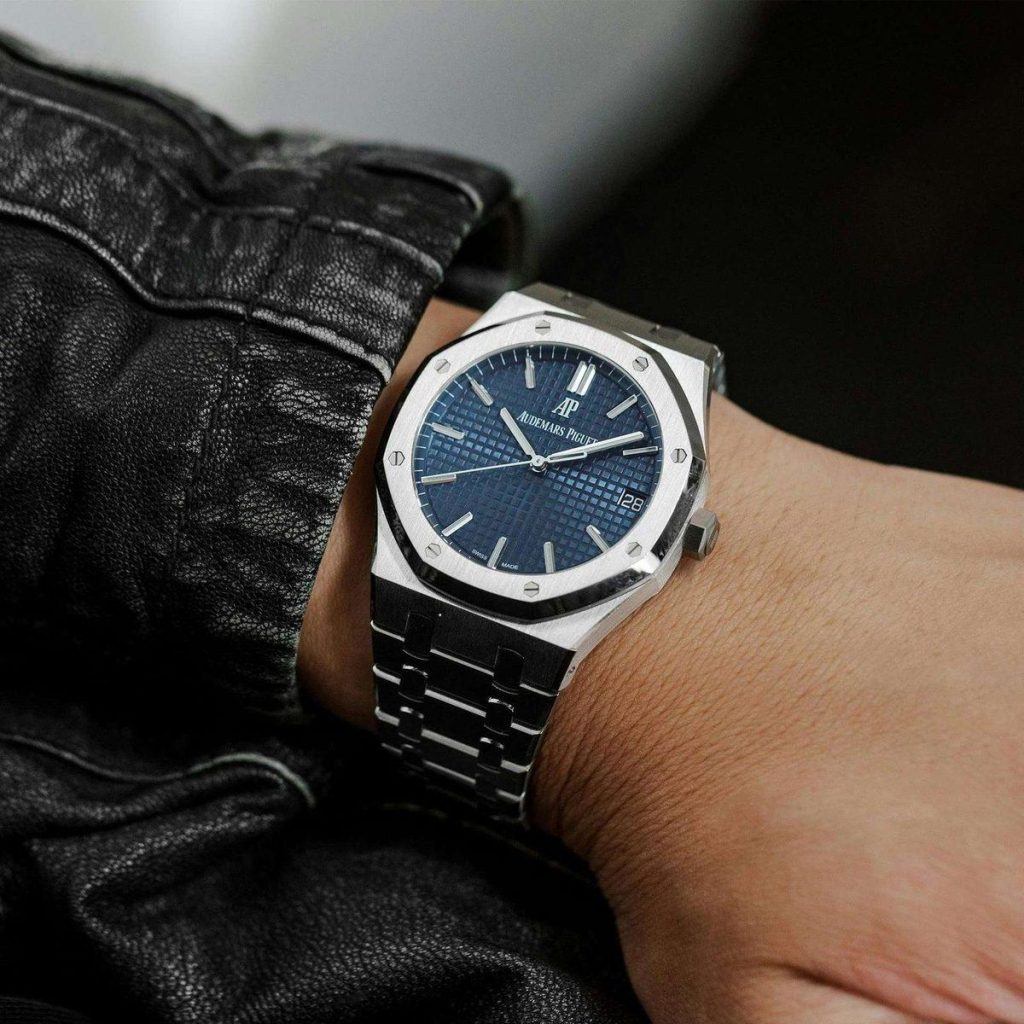
The Audemars Piguet heritage Royal Oak collection 15400, 15500, and 15510 share a 41mm case and the same iconic octagonal bezel — but stop there. From the movement beating inside to the tapisserie details pattern carved into each dial, these three generations differ in ways most comparison guides skip entirely. I’ve handled all three references, spent hours comparing them side-by-side, and here’s what actually separates one from another.
If you’re looking at a Royal Oak right now and wondering which reference to pick, you’re not alone. This is the single most asked question across every watch forum, from Reddit’s RepTime to RWI and WatchUSeek. The 15400 was discontinued in 2019. The 15500 replaced it and lasted until 2022. The 15510 sits in AP’s current lineup. Each brought real changes — some obvious, some you’d miss unless someone pointed them out.
Let me walk you through every difference, with exact specs, so you can pick the reference that fits your wrist, your taste, and your priorities.
Quick Specs: All Three References at a Glance
✦ marks the advantage for that specification.
The Evolution: 15400 → 15500 → 15510
Gerald Genta sketched the Royal Oak on a single night in 1971. The Royal Oak collection hasn’t stopped evolving since. But the 15400-to-15510 transition represents the biggest generational shift in the modern era — three references across fourteen years, each refining what came before.
The 15400 Era (2012–2019): The Last Thin Royal Oak
The 15400 replaced the 15300 and introduced the 41mm case size that would become standard. Inside sat Caliber 3120 — a reliable workhorse running at 21,600 vibrations per hour with a 60-hour power reserve. At 9.8mm thick, the 15400 remains the thinnest 41mm Royal Oak ever produced. That’s not nostalgia talking — it’s a full 0.6mm thinner than what followed, and you feel that difference on the wrist.
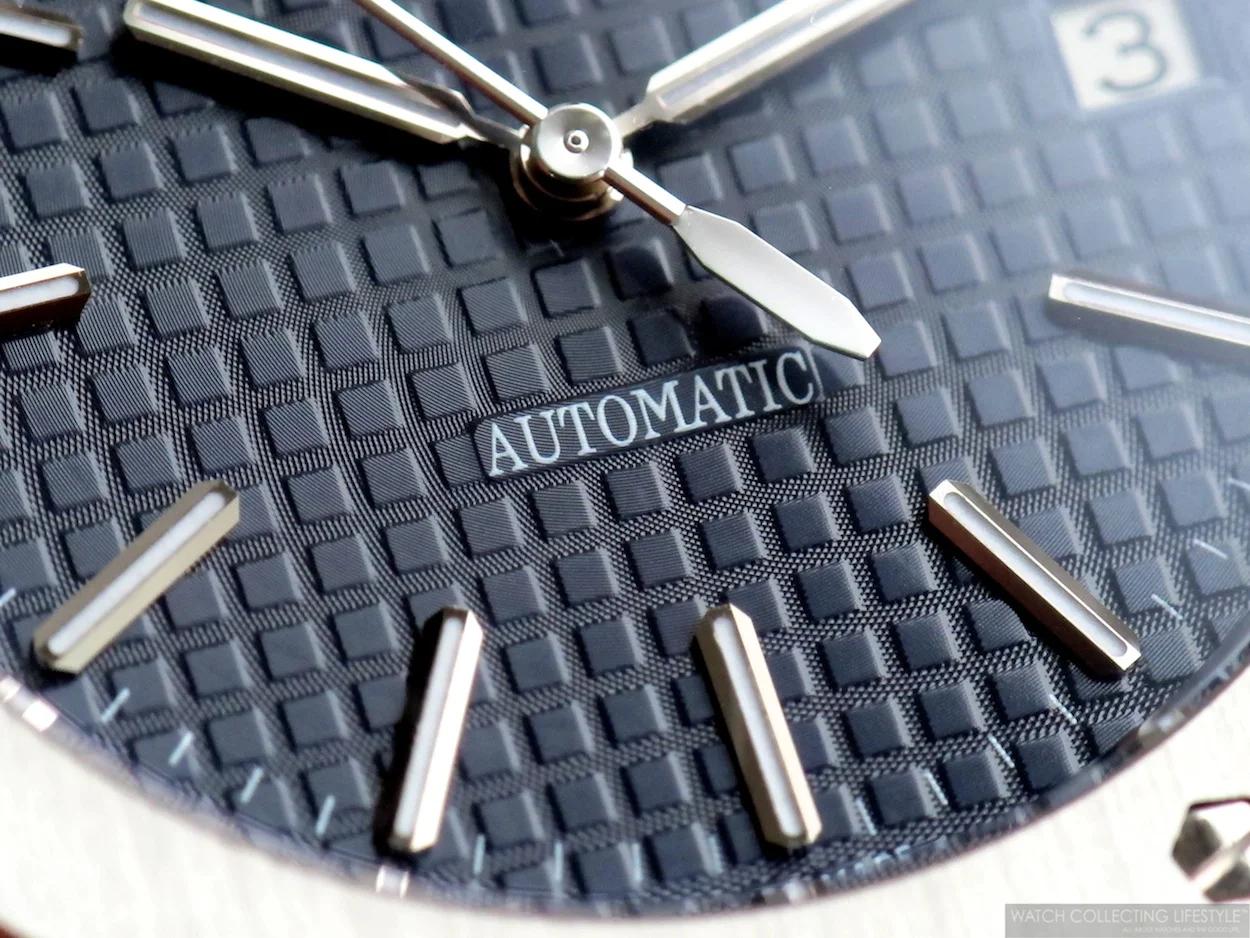
The dial carried “Automatic” text below center and the interlinked “AP” monogram. Hour markers were long and thin. A small baton marker sat at 3 o’clock above the date window — a detail purists either loved or found visually unbalanced.
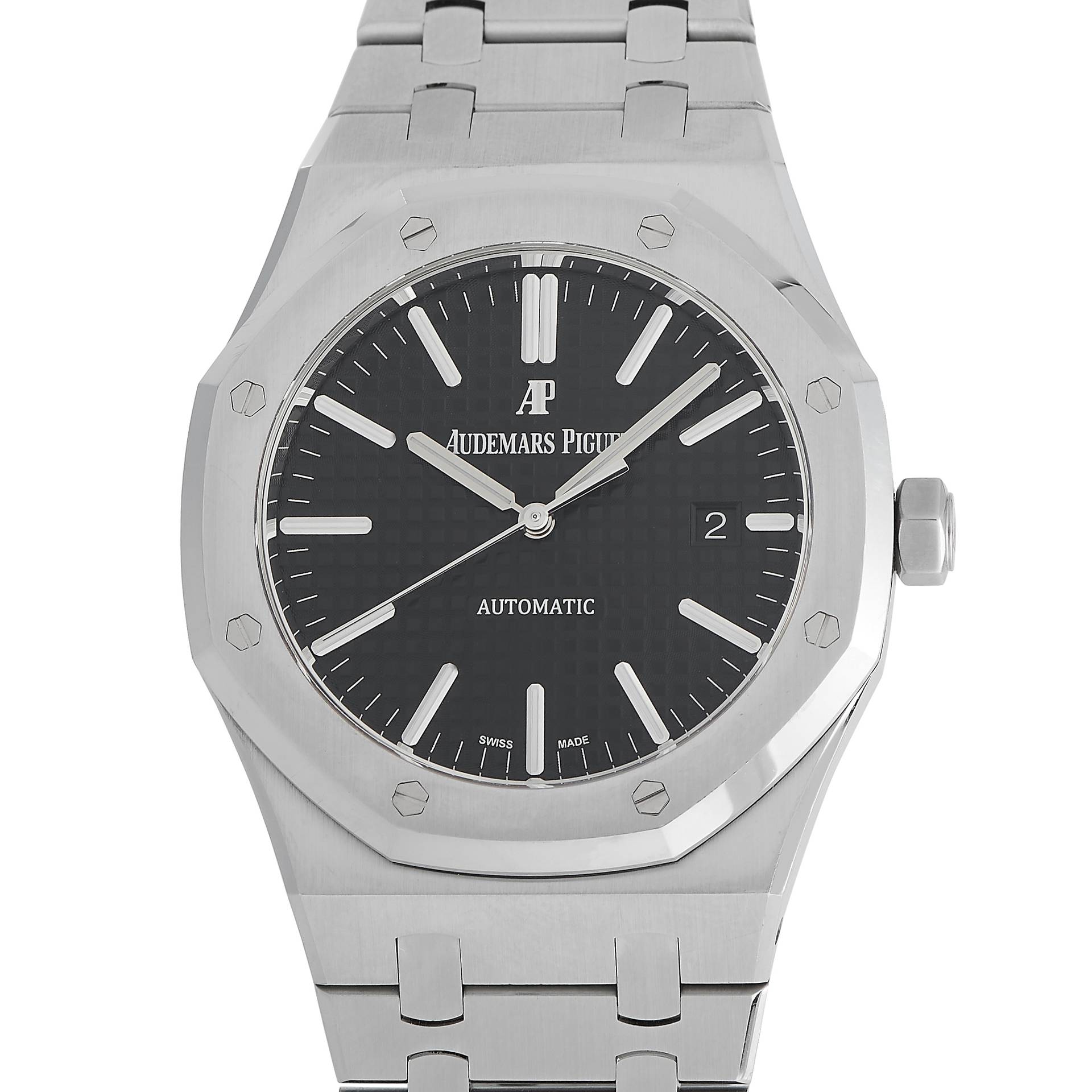
Collector’s Note: The 15400 was discontinued in 2019 and trades at roughly $34,000 on the secondary market — nearly double its original $18,000 retail. Discontinued references tend to hold value, and the 15400’s thinner profile gives it a unique proposition no current production Royal Oak can match.
The 15500 Transition (2019–2022): New Movement, New Proportions
The 15500 brought the most significant mechanical upgrade in modern Royal Oak history: Caliber 4302. This movement runs at 4 Hz (28,800 vph) instead of the 15400’s 3 Hz, producing a noticeably smoother seconds hand sweep. Power reserve climbed from 60 to 70 hours — take it off Friday evening, put it on Monday morning, and it’s still ticking.
The cost? Thickness. Cal. 4302 measures 4.8mm versus Cal. 3120’s 4.26mm. That extra half-millimeter pushed the case from 9.8mm to 10.4mm. On paper, 0.6mm sounds trivial. On the wrist, it shifts the Royal Oak from “dress watch that happens to be steel” toward “sport-luxury statement.”
Dial changes were deliberate: the “Automatic” inscription disappeared. Hour markers got shorter but wider — chunkier, more modern. The 3 o’clock baton marker vanished, replaced by a date window pushed further toward the dial edge. The minute track moved from the dial surface to a separate satin-finished outer ring.
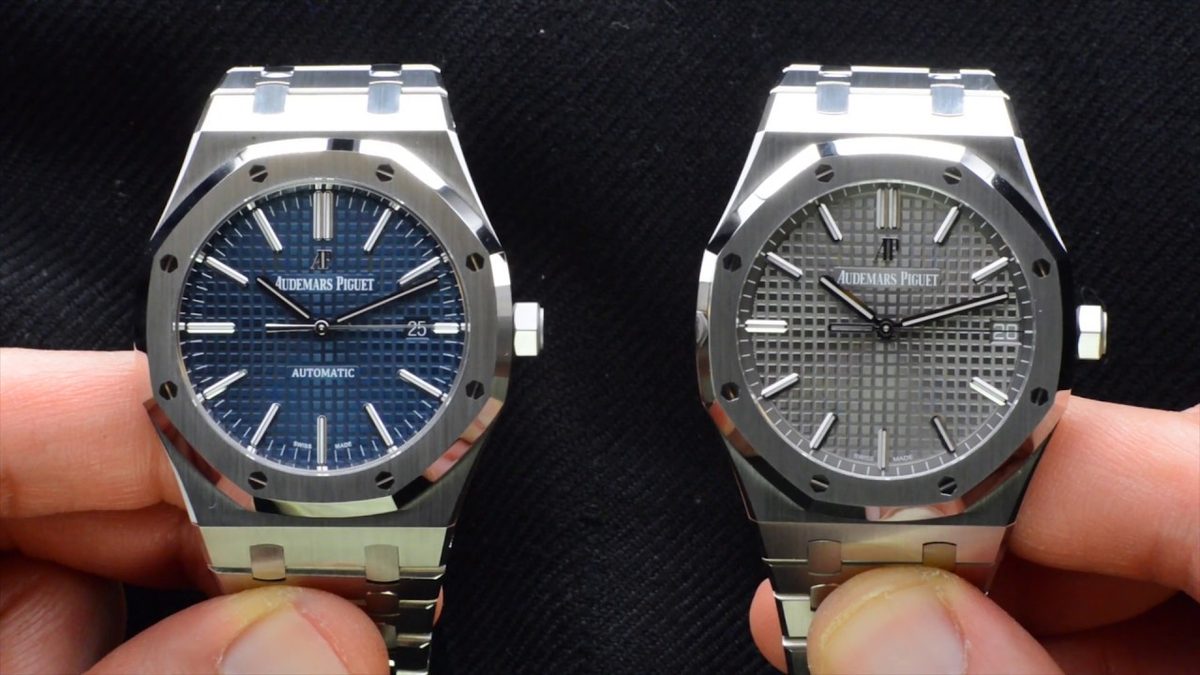
The 15510 Refinement (2022–Present): Full Tapisserie, Lighter Feel

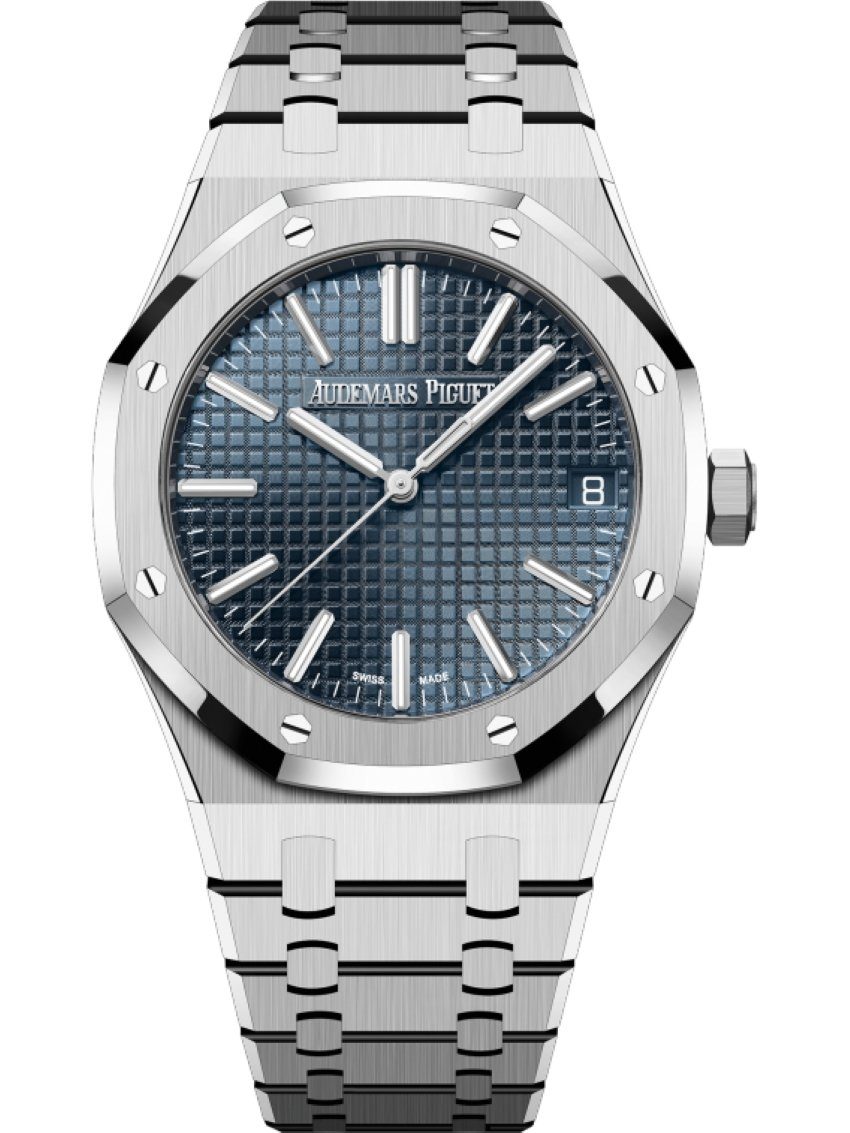
The 15510 shares the same Cal. 4302 as the 15500 — same thickness, same power reserve, same frequency. So what changed? Everything visible.
The Grande Tapisserie pattern now covers the entire dial. That separate minute track ring from the 15500? Gone. The tapisserie extends edge-to-edge, giving the dial a more unified, expansive look. The “AP” monogram disappeared — replaced by the full “Audemars Piguet” name in a refined printed font. Hour markers went back to being thinner and longer, reaching closer to the dial’s edge.
The bracelet got thinner links — a nod to the legendary 15202 “Jumbo” proportions. The result: despite identical case dimensions, the 15510 wears lighter and smaller than the 15500. Wider high-polished bevels on the bezel and caseback add finishing details visible only up close. And the caseback carries a “50 Years” engraving commemorating the Royal Oak’s golden anniversary.
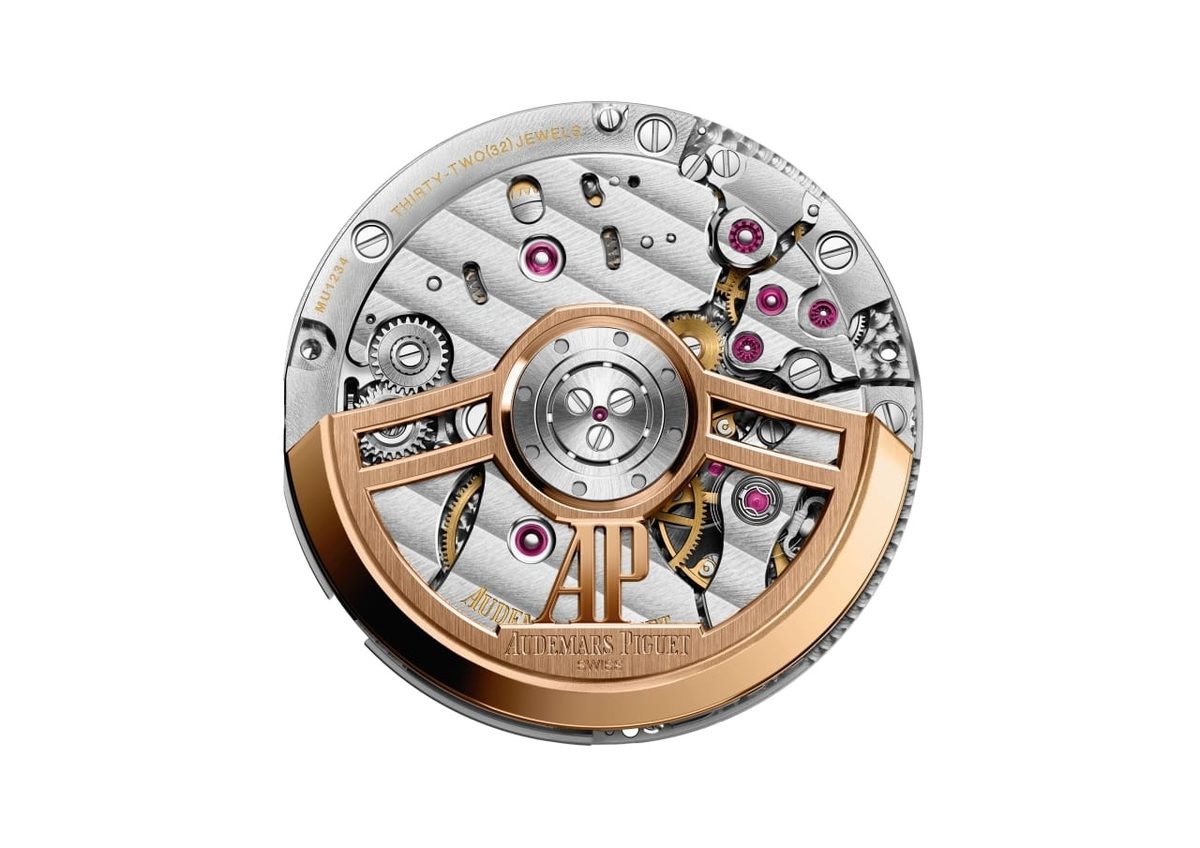
Movement Deep-Dive: Caliber 3120 vs Caliber 4302
This is where the AP Royal Oak 15400 vs 15500 comparison gets technical — and where the real differences live.
The Cal. 4302 is physically larger — 32mm versus 26.6mm — which fills more of the caseback view but also explains the increased case thickness. The higher beat rate means the seconds hand glides more smoothly, a detail that becomes obvious once you’ve seen both side by side. And the extra 10 hours of power reserve sounds modest, but it’s the difference between a weekend-proof watch and one that dies Saturday night.
Practical Tip: If case thickness matters to you — and for many collectors it’s the deciding factor — the 15400’s 9.8mm profile slides under a dress shirt cuff without bulge. The 15500 and 15510 at 10.4mm still work, but you’ll feel the extra half-millimeter every time you button your sleeve. The 15510’s thinner bracelet helps compensate, making it feel lighter than the 15500 despite identical case dimensions.
Dial Design: Three Generations of Tapisserie
The Grande Tapisserie pattern is what makes a Royal Oak a Royal Oak. It takes Audemars Piguet approximately seven hours to engrave one dial using a technique called guillochage — a controlled mechanical engraving process that creates the signature grid of small raised squares with concentric patterns radiating outward.
Each generation handled the tapisserie differently:
15400 — Classic Layout
- Grande Tapisserie with integrated minute track on dial
- “Automatic” text below center
- “AP” interlinked monogram at 12
- Long, thin applied hour markers
- Small baton at 3 o’clock above date
15500 — Modernized
- Grande Tapisserie stops at inner ring
- Separate satin-finished minute track ring
- “Automatic” removed — cleaner dial
- Shorter, wider hour markers
- No baton at 3, date window at edge
15510 — Full Tapisserie
- Tapisserie extends to dial edge — no separate ring
- “AP” monogram gone — full “Audemars Piguet” name
- Thinner, longer markers reaching toward bezel
- Wider polished bevels on bezel
- “50 Years” caseback engraving
Dial Colors Available
Dial Color Insight: Blue commands a 27% price premium over other dial colors on the secondary market. The blue tapisserie catches light differently at every angle — one reason it became the signature Royal Oak color. That said, black offers the best legibility and pairs equally well with a suit or a T-shirt. For the AP Royal Oak 15400 vs 15500 comparison specifically, the blue dial on the 15400 runs slightly lighter than the 15500’s deeper, more saturated blue.
Bracelet & Comfort: Where the 15510 Surprises
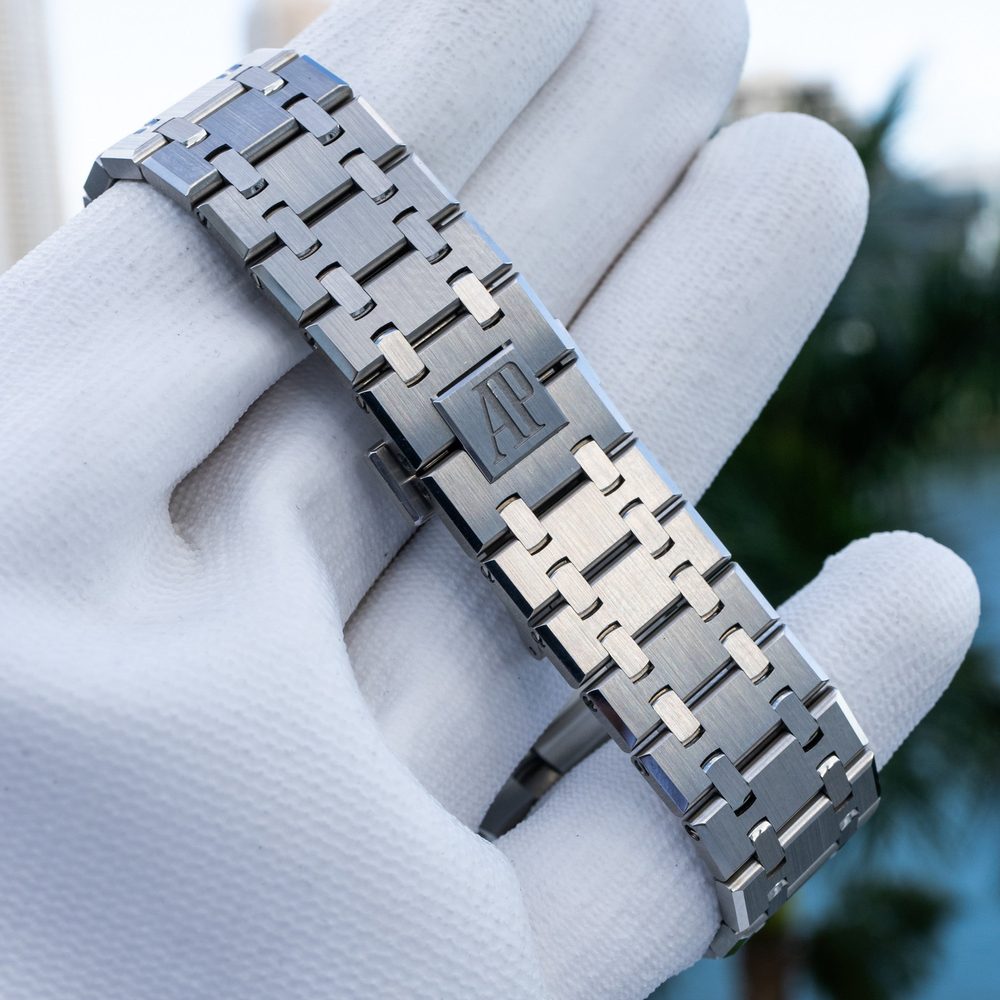
All three references use the integrated steel bracelet — Gerald Genta’s 1972 masterstroke that makes the Royal Oak look like it was carved from a single piece of metal. But the execution evolved significantly.
The 15400 and 15500 bracelets are virtually identical: same link thickness, same clasp mechanism, same overall feel. The 15510 changed the formula with thinner links inspired by the 15202 “Jumbo”. The result transforms how the watch sits on the wrist — lighter, more articulate, draping closer to the skin.
Combined with the wider polished bevels on the 15510’s bezel, the visual effect is a watch that looks smaller than the 15500 despite sharing identical case dimensions. Multiple forum reviewers describe the 15510 as “wearing like a 40mm watch” compared to the 15500’s more substantial 41mm presence.
Market Value: What Each Reference Costs in 2026
The 15400 trades at nearly double its original retail despite being discontinued for seven years — a testament to collector demand for the thinnest modern Royal Oak. The 15510 shows the strongest recent appreciation at +17% year-over-year, outpacing the broader luxury watch market average of 8.4%.
All three references illustrate why the Royal Oak consistently outperforms most luxury timepieces as a store of value. A complete set with box and papers typically commands a 15–25% premium over watch-only sales.
Which Royal Oak Reference Should You Choose?
Choose the 15400 if…
- Case thickness is your top priority (9.8mm)
- You prefer the classic “Automatic” dial layout
- You value discontinued-reference exclusivity
- You want the thinnest 41mm Royal Oak ever made
- Dress watch versatility matters more than tech specs
Choose the 15500 if…
- You want Cal. 4302’s smoother sweep and 70-hour reserve
- You prefer the cleaner dial without “Automatic” text
- The “sweet spot” price between old and new appeals to you
- Blue dial is your target — the 15500’s blue is iconic
- You like the separate minute track ring aesthetic
Choose the 15510 if…
- Full-dial tapisserie is the look you want
- A lighter, thinner-bracelet feel matters to you
- You want the latest production reference
- Green or khaki dials interest you (exclusive to 15510)
- Investment appreciation is a consideration (+17% YoY)
My Take: If you haven’t owned a Royal Oak before and want the current-production experience, the 15510 delivers the most refined package. But if that 9.8mm thickness calls to you — and for many collectors it’s the single most important spec — the 15400 remains unmatched. There’s no wrong answer among these three. Each represents a different philosophy: the 15400 is elegant restraint, the 15500 is modern capability, and the 15510 is considered refinement.
Wrist Size Recommendations
All three references are 41mm, but they wear differently. Here’s how each fits based on wrist circumference:
For smaller wrists under 6.5 inches, consider the 37mm Royal Oak 15450 — it wears like a 39mm round watch due to the octagonal case shape and delivers the same Grande Tapisserie experience in a more compact package.
Frequently Asked Questions
Is the AP Royal Oak 15400 still worth buying guide in 2026?
Absolutely. The 15400 offers the thinnest case (9.8mm) of any 41mm Royal Oak — a spec no current production model matches. Its Cal. 3120 is proven and serviceable. Secondary market prices have stabilized around $34,000, and as a discontinued reference, supply only shrinks over time. If slim profile and classic dial design matter to you, the 15400 is arguably the most compelling choice.
What is the biggest difference between the Royal Oak 15500 and 15510?
The dial. The 15510’s Grande Tapisserie pattern covers the entire dial — no separate minute track ring. The “AP” monogram is gone, replaced by the full “Audemars Piguet” name. The bracelet links are thinner, making the 15510 feel lighter. Mechanically, they’re identical: same Cal. 4302, same 70-hour power reserve, same dimensions. The 15510 is a visual and tactile refinement, not a technical upgrade.
Why is the 15500 thicker than the 15400?
Caliber 4302. The new movement is physically larger (32mm diameter vs 26.6mm) and thicker (4.8mm vs 4.26mm). That extra 0.54mm of movement thickness, plus accommodating the larger diameter, pushed the case from 9.8mm to 10.4mm. AP traded thinness for a higher beat rate (4 Hz vs 3 Hz) and longer power reserve (70h vs 60h).
Which dial color is closest between generations?
Black is the most consistent across all three references — the Grande Tapisserie pattern creates similar depth and contrast regardless of generation. Blue varies: the 15400 blue runs lighter and more vibrant, while the 15500 blue is deeper and more saturated. The 15510 blue sits between the two. For a safe choice across any reference, black never disappoints.
Can you swim with any of these Royal Oak models?
All three carry 50m water resistance ratings. AP confirms you can swim and shower with them, provided the crown is fully screwed down and the watch has been serviced within the last 2 years. That said, 50m is the lowest practical water resistance — no deep diving, no high-pressure water jets. For serious water exposure, consider the Royal Oak Offshore with its higher water resistance ratings.
Which Royal Oak reference holds its value best?
Currently, the 15510 shows the strongest appreciation — up 17% year-over-year as of early 2026. The 15400 benefits from discontinued-reference scarcity and trades at nearly double its original retail. The 15500, sandwiched between an iconic predecessor and a refined successor, holds steady but doesn’t command the same premium. All three outperform most luxury watch brands in value retention.
Final Verdict
The AP Royal Oak 15400 vs 15500 vs 15510 debate doesn’t have a single winner — each reference serves a different collector. The 15400 is for the purist who prioritizes a slim profile and classic aesthetics. The 15500 is for the pragmatist who wants modern movement technology at a mid-range price point. The 15510 is for the collector who demands the latest refinements and doesn’t mind paying current-production premiums.
What unites all three is the same 41mm octagonal case Gerald Genta drew in a single night over fifty years ago — eight hexagonal white gold screws, an integrated bracelet that flows from case to clasp, and a Grande Tapisserie dial that takes seven hours to engrave. That’s the Royal Oak. The reference number just tells you which chapter of the story you’re wearing.
Ready to explore? Browse our complete Royal Oak collection — including 15400ST, 15500ST, and 15510ST references in every dial color.

